Modern farming is evolving rapidly, and one of the most effective and sustainable crop protection approaches today is Integrated Pest Management (IPM). With increasing concerns about excessive pesticide use, rising pest resistance, and the need for sustainable farming, IPM has become a preferred solution for farmers worldwide. It combines scientific methods, pest observation, prevention techniques, and selective pesticide application to reduce crop loss and promote environmental safety.
In this blog, we explore how Integrated Pest Management (IPM) helps reduce crop damage, improves yield, protects soil health, and supports long-term agricultural sustainability. IPM strategies in agriculture, pest monitoring techniques, reduce pesticide usage, sustainable crop protection, and prevent pest resistance throughout the content.
What is Integrated Pest Management (IPM)?
Integrated Pest Management is a scientific and eco-friendly approach to controlling pests in agriculture. Instead of depending solely on chemicals, IPM focuses on combining multiple pest control strategies such as:
- Biological control
- Pest monitoring
- Habitat manipulation
- Mechanical and cultural methods
- Safe and need-based chemical application
The ultimate aim of IPM is to reduce pesticide usage, protect crop productivity, and ensure long-term sustainability.
Why Integrated Pest Management is Important for Modern Farming
Traditional farming relied heavily on pesticides, but overuse has led to problems such as:
- Decline in beneficial insects
- Pollution of soil and water
- Development of pesticide resistance in pests
- Higher cost of crop protection
Integrated Pest Management (IPM) solves these challenges by promoting sustainable crop protection and using chemicals only when required.
Integrated Pest Management Strategy 1: Pest Monitoring Techniques
Importance of Pest Monitoring in IPM
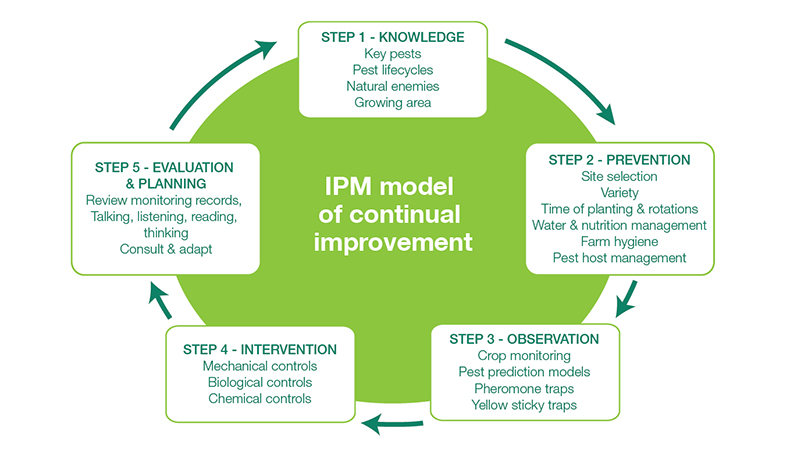
One of the most important principles of IPM is accurate pest monitoring. Rather than spraying pesticides blindly, farmers monitor pest presence and population before taking action. This helps:
- Apply treatment only when pest levels cross economic threshold limits
- Reduce pesticide usage
- Save money and time
- Protect natural enemies of pests
Common Pest Monitoring Techniques
- Sticky traps
- Light traps
- Pheromone traps
- Field scouting
- Weather-based prediction models
By mastering pest monitoring techniques, farmers can detect pest attacks early and take corrective action before the damage becomes severe.
Integrated Pest Management Strategy 2: Cultural and Mechanical Methods
Cultural Practices for Sustainable Crop Protection in Integrated Pest Management
Cultural methods are one of the simplest and most cost-effective IPM strategies in agriculture. These practices focus on modifying farming conditions to make the environment unfavorable for pests:
- Crop rotation
- Using pest-resistant varieties
- Maintaining field hygiene
- Proper spacing
- Water management
- Timely sowing
These methods prevent pests from multiplying and support healthier crop growth.
Mechanical Pest Control in Integrated Pest Management
Mechanical IPM measures include:
- Hand-picking pests
- Installing physical barriers
- Traps and nets
- Deep ploughing
These practices help reduce crop loss without using any chemicals.
Integrated Pest Management Strategy 3: Biological Control – Nature’s Pest Control System
Use of Natural Enemies
Biological control is a core component of sustainable crop protection. Instead of using chemicals, farmers introduce natural predators or beneficial organisms that feed on harmful pests.
Examples:
- Ladybird beetle against aphids
- Trichogramma wasps against caterpillars
- Fungal and bacterial biopesticides
Farmers can increase beneficial insect populations by:
- Avoiding excessive pesticide spraying
- Growing flowering plants around the field
- Maintaining biodiversity
This approach is cost-effective, eco-friendly, and long-lasting.
IPM Strategy 4: Need-Based Pesticide Application
Reducing Pesticide Usage
One of the key goals of IPM is to reduce pesticide usage while maintaining crop productivity. With pest monitoring, biocontrol, and farming practices in place, chemical sprays are used only when absolutely necessary.
Farmers can optimize pesticide use through:
- Applying only registered and crop-approved products
- Following recommended dosages
- Spot treatment instead of blanket spraying
- Using protective gear during application
This ensures safer food production and prevents excessive chemical load on the environment.
Preventing Pest Resistance
Overuse of chemicals leads to the development of pesticide-resistant pests, making future control more difficult. IPM helps prevent pest resistance by:
- Alternating chemical groups
- Reducing spray frequency
- Using biological and cultural control methods
- Avoiding unnecessary pesticide exposure
This balanced approach helps maintain the long-term effectiveness of crop protection solutions.
How Integrated Pest Management Helps Reduce Crop Loss
Integrated Pest Management improves crop protection and reduces losses in multiple ways:
1. Early Pest Detection with Integrated Pest Management
Continuous monitoring enables farmers to detect pests before they spread, minimizing crop damage.
2. Lower Input Costs with Integrated Pest Management
Since pesticides are used only when necessary, farmers save money on chemical purchases and spraying operations.
3. Higher Crop Quality with Integrated Pest Management
Lower pesticide residues result in cleaner, safer, and export-friendly produce.
4. Better Soil and Environmental Health with Integrated Pest Management
Reduced chemical exposure improves:
- Soil fertility
- Water quality
- Biodiversity
5. Higher Yields
With balanced crop protection, plants remain healthier and deliver better output season after season.
Integrated Pest Management Supports Sustainable Agriculture
Sustainability is becoming a priority in global agriculture. Customers now prefer chemical-free food, governments promote low-residue farming, and farmers want long-term productivity without damaging the environment.
IPM helps achieve these goals by:
- Reducing dependency on pesticides
- Supporting natural pest control systems
- Improving farmer profitability
- Protecting soil and ecological balance
- Ensuring long-term crop health
This makes IPM one of the most effective systems for sustainable crop protection.
Challenges in Implementing Integrated Pest Management
Despite its benefits, some challenges exist:
- Lack of awareness among farmers
- Limited access to pest forecasting tools
- Shortage of trained field experts
- Initial effort required for monitoring
However, with proper training and extension services, IPM adoption is growing rapidly.
Future of Integrated Pest Management in Indian Agriculture
Digital agriculture and modern crop management tools are accelerating IPM adoption. Farmers today have access to:
- Smartphone apps
- AI-based pest diagnosis
- Drone surveillance
- Predictive models
- Online advisory platforms
These advancements make IPM easier, faster, and more reliable than ever before.
Conclusion
Integrated Pest Management is not just a crop protection method—it is a smart, scientific, and profitable farming philosophy. By combining pest monitoring techniques, biological control, mechanical methods, and need-based pesticide application, IPM helps:
- Reduce pesticide usage
- Prevent pest resistance
- Improve crop quality
- Protect the environment
- Reduce crop loss sustainably
With rising demands for high-quality produce and sustainable agricultural solutions, IPM is becoming a powerful tool that can transform the future of farming.